
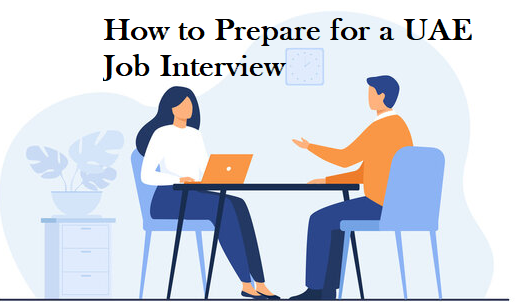
Preparing for a UAE job interview is not simply about answering questions confidently. It is about understanding the job, researching the employer, presenting your experience clearly and demonstrating that you are ready to work in the UAE.
Many professionals say they want to work in the UAE. They search for vacancies, update their CVs, contact recruiters and build professional networks.
But getting an interview and being prepared for an interview are two different things.
Some candidates depend too much on references or personal connections. Others apply for many jobs without studying the role or understanding what UAE employers may expect from them.
A better approach is simple:
Build your capability, understand the opportunity, prepare properly and use networking to create professional connections—not dependency.
This guide explains how to prepare for a UAE job interview, particularly for candidates applying from outside the UAE.
1. Understand What a UAE Job Interview May Evaluate
Before preparing answers, understand what the employer may want to know about you.
A job interview can help an employer evaluate several areas of your professional profile.
Your Professional Experience
Be prepared to explain:
- Your current and previous roles
- Your responsibilities
- Your industry experience
- Your achievements
- Your leadership experience
- Your technical skills
- Your professional development
Your Communication Skills
For many roles, being able to communicate clearly is as important as having technical knowledge.
The interviewer may assess how well you:
- Explain your experience
- Answer questions
- Listen
- Communicate with colleagues or customers
- Handle difficult situations
- Present your ideas
Your Suitability for the Role
The interviewer wants to understand whether your experience and skills match the position.
This is why UAE job interview preparation should begin with the job description, not with a list of generic interview questions.
2. Study the UAE Job Description Carefully
One of the first steps in preparing for a UAE job interview is understanding exactly what the employer is looking for.
Do not prepare only from the job title.
A Marketing Manager, for example, may have completely different responsibilities depending on the organisation.
Identify the Requirements
Read the vacancy carefully and identify:
- Required qualifications
- Years of experience
- Technical skills
- Industry experience
- Management responsibilities
- Communication requirements
- Software or technology requirements
- Location
- Joining requirements
Then compare those requirements with your own profile.
Create Your Interview Preparation Notes
Make three simple lists:
What the employer needs
What I already have
Where I need to improve
This exercise helps you prepare answers based on the actual position.
3. Research the UAE Employer Before the Interview
A candidate should never enter a job interview knowing only the name of the company.
Research the employer before the interview.
What Should You Research?
Look at:
- The company’s official website
- Products and services
- Industry
- Business activities
- Locations
- Leadership
- Recent developments
- Company values
- Target customers
- Competitors
You do not need to become an expert on the company overnight.
You simply need to demonstrate that you have taken the opportunity seriously.
Be Ready for “Why Do You Want to Work With Us?”
A weak answer is:
“Because I want to work in the UAE.”
That explains your personal objective but not your interest in the employer.
A stronger response connects your experience, the role and the organisation.
The company should understand why you are interested in its opportunity—not simply why you want a UAE job.
4. Know Your CV Before the UAE Job Interview
Your CV is likely to be the foundation of the interview.
If something is written on your CV, be prepared to discuss it.
Review Your Career History
Go through:
- Every major position
- Employment dates
- Responsibilities
- Achievements
- Qualifications
- Certifications
- Projects
- Technical skills
- Leadership experience
Be particularly prepared to explain career changes, employment gaps or transitions if they are relevant to your background.
Do Not Add Skills You Cannot Explain
A common interview mistake is adding skills or software to a CV simply because they appear frequently in job descriptions.
If the interviewer asks about a skill listed on your CV, you should be able to explain:
- Where you used it
- How you used it
- What level of experience you have
- What results you achieved
Your CV should be a document you can confidently defend in an interview.
5. Prepare Your “Tell Me About Yourself” Answer
“Tell me about yourself” is one of the most common job interview questions.
It sounds simple, but many candidates turn it into a five-minute biography.
Instead, prepare a concise professional introduction.
A Simple Structure
Your introduction can include:
- Your profession
- Your years or type of experience
- Your strongest professional areas
- One or two relevant achievements
- Why your background fits the role
For example:
“I am a hospitality professional with experience in hotel operations and guest services. Over the past several years, I have developed strong experience in team management and service quality. In my previous role, I was responsible for… I am now looking to bring that experience into a larger and more international working environment.”
Do not memorise every sentence.
Practise the structure so that your answer sounds natural.
6. Prepare Examples From Your Previous Experience
Interviewers often want evidence rather than general statements.
Instead of saying:
“I am good at solving problems.”
Prepare an actual example.
Use the STAR Method
A useful structure for behavioural interview questions is:
S — Situation
What was happening?
T — Task
What were you responsible for?
A — Action
What did you personally do?
R — Result
What happened?
For example, if asked:
“Tell me about a difficult customer situation you handled.”
Explain the situation, your responsibility, the action you personally took and the result.
Prepare 5–7 Strong Examples
Before your interview, prepare examples involving:
- Problem solving
- Leadership
- Teamwork
- Conflict
- Customer service
- Working under pressure
- Failure or learning
- Taking initiative
- Achieving a measurable result
These examples can often be adapted to different interview questions.
7. Prepare for UAE Job Interview Questions
Do not wait until the interview invitation arrives to start thinking about questions.
Prepare in advance.
Common UAE Job Interview Questions
You may encounter questions such as:
- Tell me about yourself.
- Why do you want to work in the UAE?
- Why do you want to work for our company?
- What are your strengths?
- What is an area you are working to improve?
- Why should we hire you?
- What are your salary expectations?
- Why are you considering leaving your current job?
- Tell me about a difficult situation you handled.
- Tell me about a professional achievement.
- How do you handle pressure?
- Where do you see yourself in the next few years?
The exact questions will depend on the employer, industry and position.
Do not memorise standard answers from the internet.
Understand the question and prepare your own response based on your real experience.
8. Prepare for Role-Specific Interview Questions
A generic interview preparation guide cannot replace preparation for your specific profession.
Technical Questions
Depending on your industry, you may face questions related to:
- Professional knowledge
- Technical skills
- Industry standards
- Software
- Processes
- Projects
- Regulations
- Problem solving
Management Questions
For management positions, prepare for questions around:
- Team leadership
- Performance management
- Decision making
- Conflict resolution
- Budget responsibility
- Strategy
- Reporting
- Business results
Fresh Graduates
If you have limited experience, do not try to compete by pretending to have experience you do not have.
Instead, prepare examples from:
- Internships
- Academic projects
- Volunteering
- University activities
- Part-time work
- Personal projects
The objective is to demonstrate potential, learning ability and professionalism.
9. Prepare for Questions About Working in the UAE
International candidates may be asked questions about their readiness to work in the UAE.
Questions You May Need to Consider
You could be asked:
- Are you currently in the UAE?
- Are you willing to relocate?
- When can you join?
- Have you worked in the UAE before?
- Why have you chosen the UAE?
- Are you familiar with the industry here?
- Are you comfortable working in a multicultural environment?
Prepare honest answers.
Do not say that you can relocate immediately if your circumstances do not allow it.
Professional honesty is more valuable than giving an answer simply because you think it sounds impressive.
10. Networking Can Help—But It Should Not Replace Preparation
Networking is important when building a career in the UAE.
But networking and dependency are two different things.
What Networking Can Do
Professional networking can help you:
- Understand the UAE job market
- Meet professionals
- Learn about industries
- Discover opportunities
- Understand company cultures
- Learn from experienced people
- Develop professional relationships
What Networking Cannot Guarantee
A connection cannot guarantee that an employer will select you.
A reference cannot replace relevant skills.
A personal introduction cannot replace interview preparation.
The healthiest approach is:
Use networking to open professional conversations. Use your skills and preparation to build your case.
11. How to Use LinkedIn for UAE Job Interview Preparation
LinkedIn can be useful before and after an interview.
Before the Interview
Research:
- The company
- Interviewers, where publicly available
- Relevant industry professionals
- Company updates
- Professional discussions
This can help you understand the professional environment.
Build Your Own Professional Presence
Your LinkedIn profile should broadly align with your CV.
Make sure your:
- Job titles
- Experience
- Skills
- Professional summary
- Certifications
are accurate and consistent.
Do not try to create an artificial professional image.
Your online professional profile should support your real experience.
12. Practise Your Interview Before the Real Interview
Interview practice is one of the simplest ways to improve.
You can practise alone, with a professional colleague or through a mock interview.
Review Your Answers
After practising, ask:
- Did I answer the actual question?
- Was my answer too long?
- Did I give a specific example?
- Did I communicate clearly?
- Did I sound confident?
- Did I explain my contribution?
- Did I avoid unnecessary information?
Practise, Don’t Memorise
Memorising complete answers can make your responses sound unnatural.
Instead, remember the key points and examples.
The goal is to be prepared enough to think clearly when the interviewer asks something unexpected.
13. Prepare for an Online UAE Job Interview
Many international candidates may interview remotely.
Technical preparation is therefore part of your interview preparation.
Before the Interview
Check:
- Internet connection
- Camera
- Microphone
- Laptop or phone battery
- Meeting software
- Lighting
- Background
- Noise level
Keep your CV and the job description accessible.
Join the meeting a few minutes early.
Choose the Right Environment
Find a quiet and professional location.
Avoid:
- Loud background noise
- Constant interruptions
- Poor lighting
- Unstable internet
- Distracting backgrounds
Your objective is simple:
Make it easy for the interviewer to focus on you and your answers.
14. Prepare Your Questions for the Interviewer
A job interview is not only about answering questions.
You should also be prepared to ask relevant questions.
Useful Questions to Ask
You might ask:
- What would be the key priorities for this position during the first few months?
- How is success measured in this role?
- What are the main challenges facing the team?
- How is the department structured?
- What skills are most important for someone succeeding in this position?
Thoughtful questions show that you are considering the role seriously.
Avoid making the entire conversation about salary, holidays or benefits before understanding the position.
15. Prepare Your Documents
Keep your professional documents organised.
Depending on the position and employer, you may need:
- Updated CV
- Educational certificates
- Professional certifications
- Experience documents
- Portfolio
- Professional licence, where applicable
- References, where requested
Keep digital copies organised and accessible.
Protect Your Personal Information
Do not send sensitive documents to unknown individuals simply because they claim to have a UAE job opportunity.
Verify the employer and recruitment process before sharing personal information.
Job searching requires preparation—and caution.
16. Dress and Present Yourself Professionally
Your appearance should be appropriate for the position and professional environment.
Focus on:
- Clean and professional clothing
- Grooming
- Posture
- Eye contact
- Facial expression
- Body language
For an online interview, camera position and lighting also matter.
You do not need an expensive setup.
You need a clean, professional and distraction-free presentation.
17. Prepare Your Answer to “Why UAE?”
For international candidates, this can be an important question.
Think about your genuine professional reasons for considering the UAE.
Your answer should not depend entirely on:
- Salary
- Lifestyle
- Tax advantages
- Leaving your current country
- Getting any available job
Instead, connect your professional goals with the UAE market and your industry.
Keep It Genuine
There is no single perfect answer.
Your answer should reflect:
Your experience + your career goals + the opportunity + the UAE market.
18. What If You Don’t Know the Answer?
You will not know the answer to every question.
That is normal.
If you don’t know something, do not invent an answer.
You can acknowledge the limitation and explain how you would approach learning or solving the issue.
For example:
“I haven’t worked directly with that particular system, but I have experience with similar tools and would be comfortable learning it.”
This demonstrates honesty and adaptability.
Never confuse confidence with pretending to know everything.
19. What to Do After the UAE Job Interview
Your preparation does not necessarily end when the interview finishes.
Take a few minutes to review the conversation.
Ask Yourself
- Which questions did I answer well?
- Which questions were difficult?
- Did I explain my achievements clearly?
- Did I communicate my experience effectively?
- What should I improve before my next interview?
If appropriate, send a short professional follow-up message thanking the interviewer for their time and confirming your interest.
Even if you are not selected, the interview can provide valuable experience for the next opportunity.
20. UAE Job Interview Preparation Checklist
Before your interview, check:
Job Preparation
- I understand the job description.
- I know the key responsibilities.
- I know how my experience matches the role.
Company Preparation
- I researched the employer.
- I understand its business.
- I can explain why I am interested in the company.
Personal Preparation
- I know my CV thoroughly.
- I have prepared my professional introduction.
- I have prepared examples of my achievements.
Interview Preparation
- I practised common interview questions.
- I prepared role-specific questions.
- I prepared behavioural examples.
- I have questions ready for the interviewer.
International Candidate Preparation
- I can explain why I want to work in the UAE.
- I understand my relocation situation.
- I know my expected availability.
Technical Preparation
- My internet is reliable.
- My camera and microphone work.
- My interview environment is professional.
- My documents are organised.
Conclusion: Don’t Just Want the UAE Job—Prepare for It
Many people say:
“I want a job in the UAE.”
But wanting a job and preparing for the opportunity are completely different things.
A successful UAE job search should not be built around waiting for a reference, depending on a connection or hoping that an application will somehow work.
Build your professional profile.
Understand the UAE market.
Research the employer.
Know your CV.
Practise your answers.
Prepare examples from your experience.
Build professional networks.
And most importantly:
Be ready when the interview opportunity arrives.
Networking may help you discover an opportunity.
Your CV may help you reach the interview.
But when you are sitting in front of the employer, your preparation, communication, experience and capability are yours to demonstrate.
PAD Perspective
At Plan Abu Dhabi, our approach is simple:
No placement guarantee. No promise of selection. No dependency on personal references.
PAD focuses on information, preparation, knowledge and professional development so that candidates can make better-informed decisions about pursuing opportunities in the UAE.
The goal is not to promise a UAE job.
The goal is to help you become better prepared for the opportunity.
Common Search Keywords
Primary keyword:
- How to prepare for a UAE job interview
Related keywords:
- UAE job interview preparation
- UAE interview questions
- UAE job interview questions and answers
- how to prepare for a job interview in UAE
- Abu Dhabi job interview preparation
- UAE interview tips
- UAE jobs for international candidates
- UAE jobs from overseas
- interview preparation for UAE jobs
- how to get ready for a UAE job interview
- common UAE interview questions
- UAE employment interview
- UAE career preparation
- job interview tips for UAE
- UAE job search preparation
- online interview for UAE jobs
- UAE interview for international candidates
- LinkedIn networking for UAE jobs
- how to prepare for an Abu Dhabi job interview
- UAE career opportunities