
UAE Footprint | Daily Living & Cost of Settlement
Information checked: 6 November 2026
Moving to Abu Dhabi brings many changes, and food shopping is one of the first things every Indian expatriate needs to understand.
Can you find your regular rice and atta brands? Where can you buy fresh curry leaves, drumsticks, gongura or regional spices? Is it cheaper to shop at a supermarket or a local vegetable market? How much should a single professional, a couple or a family of four budget every month?
The good news is that Abu Dhabi has a wide range of grocery options. You can find everyday Indian food ingredients, regional products, fresh vegetables, dairy, meat, snacks and familiar brands.
However, your monthly grocery bill depends on your food habits, family size, preferred brands, shopping location and how often you eat outside.
This guide explains how Indian expatriates can plan their grocery budget, find familiar ingredients and manage everyday food expenses in Abu Dhabi.
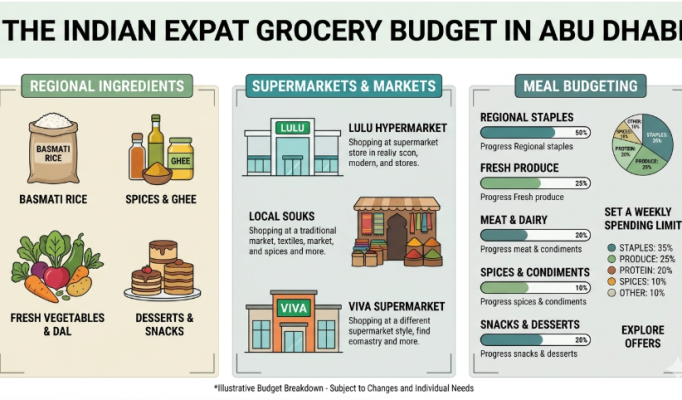
1. Understanding grocery shopping in Abu Dhabi
Indian expatriates do not need to completely change their food habits after moving to Abu Dhabi.
Many familiar products are available through supermarkets, Indian grocery shops and traditional produce markets.
You can generally find:
- Basmati rice and other rice varieties.
- Wheat flour and atta.
- Toor dal, moong dal, masoor dal and chana dal.
- Indian spices and masala powders.
- Cooking oil, ghee and pickles.
- Fresh vegetables and leafy greens.
- Milk, curd, paneer and other dairy products.
- Eggs, chicken, fish and meat.
- Indian snacks, biscuits and packaged foods.
The availability of particular regional products may vary from shop to shop.
For example, someone from Kerala may regularly look for coconut, curry leaves, puttu flour and Kerala rice. A Bengali household may prefer mustard oil, specific varieties of fish and traditional spices. A North Indian family may buy atta, basmati rice, paneer and pulses more frequently.
The important point is to understand where to shop and how to compare prices.
2. Where can Indian expatriates buy groceries?
Abu Dhabi offers different shopping options. You do not need to purchase everything from one supermarket.
A. Large supermarkets and hypermarkets
These are useful for regular household shopping.
Commonly used supermarket chains include:
- LuLu Hypermarket.
- Carrefour.
- Nesto.
- Emirates Coop.
- Choithrams.
- Spinneys.
- Al Maya.
They offer a combination of food products, household essentials, fresh produce, dairy, frozen foods and packaged groceries.
Why use large supermarkets?
- Regular promotional offers.
- Different brands and pack sizes.
- Online shopping and home delivery through available services.
- Easy comparison of product labels and prices.
- Convenient one-stop shopping.
For everyday staples, compare the price per kilogram or litre rather than choosing a product only because its packet looks cheaper.
B. Indian grocery stores
Indian-speciality shops can be particularly useful when you want familiar brands or regional ingredients.
You may find:
- Indian atta and rice brands.
- Regional pickles and masalas.
- Ready-to-cook mixes.
- Papad, snacks and sweets.
- Different varieties of dal.
- Regional cooking ingredients.
- Festival-related food products.
Examples in Abu Dhabi include Al Adil Trading and other Indian grocery outlets.
Speciality shops may offer a wider selection of particular Indian products, but they are not automatically cheaper than large supermarkets.
C. Local vegetable and fruit markets
For fresh produce, traditional markets are another option.
The Mina Zayed and Al Mina market area is a recognised destination for fruits and vegetables.
You can compare different vendors, select quantities and check the quality of the produce before buying.
Local markets can be useful for:
- Onions and potatoes.
- Tomatoes and green vegetables.
- Seasonal fruits.
- Fresh herbs.
- Bulk vegetable purchases.
- Dates and dried fruits.
However, do not assume every product is cheaper at a market. Compare quality, quantity and price before purchasing.
3. Where to find Indian grocery stores and markets
Here are a few examples that can help newcomers identify different shopping options.
Indian grocery stores
Al Adil Supermarket – Electra Street
Useful for Indian pantry essentials, spices, pulses, flour and specialty grocery products.
Al Adil Supermarket – Khalidiya
Another Indian-focused grocery option for residents around the Khalidiya area.
Al Adil Supermarket – Musaffah / MBZ City area
A convenient option to explore for Indian grocery essentials in the Musaffah and Mohammed Bin Zayed City surroundings.
Fresh produce markets
Meena Vegetable Market – Mina Zayed
A traditional market area where shoppers can compare fruits and vegetables from different vendors.
Al Mina Fruit and Vegetable Souk
Another option for fresh produce and traditional market shopping around the Zayed Port area.
Remember that these are examples, not endorsements or guaranteed lowest-price outlets. Check current opening hours, stock availability and actual prices before travelling.
4. How much do everyday grocery items cost?
Grocery prices vary according to brand, pack size, product origin, quality and promotional offers.
The UAE Ministry of Economy and Tourism operates an Essential Goods Prices Platform that helps residents compare selected products across participating retailers.
The following examples provide a useful reference from the platform and published retail listings checked in late October and early November 2026.
| Grocery item | Example price |
|---|---|
| Basmati rice, 1 kg | Around AED 4.20–4.50 in selected listings |
| Masoor dal, 500 g | Around AED 3.25 in one LuLu listing |
| Chana dal, 800 g | Around AED 5.50 in one LuLu listing |
| Fresh whole milk, 1 litre | Around AED 3.75 in a selected listing |
| Sunflower oil, 1 litre equivalent | Around AED 5.10 in a selected listing |
| White sugar, 1 kg | Around AED 2.35 in a selected listing |
| Fresh whole chicken, 1 kg equivalent | Around AED 11.31 in a selected listing |
| White eggs, per egg | Around AED 0.23 in a selected listing |
These are examples of individual products, not guaranteed prices at every Abu Dhabi branch. Some listings may be from stores in other emirates, and products with different brands or specifications are not directly comparable.
Why do grocery prices differ?
Consider rice.
A basic rice variety may cost less than a premium branded basmati rice. A 5 kg bag may have a lower price per kilogram than a 1 kg packet.
The same applies to dal, cooking oil, flour and other pantry essentials.
A simple shopping habit: Check the unit price displayed on the shelf or online listing. It helps you understand whether a larger pack actually offers better value.
5. Monthly grocery budget for Indian expatriates
Your monthly grocery budget depends on how many people live in your household and how you prepare your meals.
A single professional who cooks at home regularly will have different expenses from a family with children, varied food preferences and frequent purchases of branded products.
The following are practical planning ranges, not official average household expenditure figures.
| Household | Illustrative monthly grocery budget |
|---|---|
| Single person | AED 600–900 |
| Couple | AED 1,000–1,500 |
| Family of 3 | AED 1,400–2,000 |
| Family of 4 | AED 1,700–2,500 |
| Family of 5 | AED 2,100–3,000 |
These estimates assume mainly home-cooked meals, a mix of supermarket and Indian grocery shopping, and moderate use of packaged foods.
They do not include restaurant meals, frequent food delivery, alcohol, household cleaning products or personal-care products.
A family buying premium imported products, special dietary foods or large quantities of meat and seafood may spend considerably more.
A. Single professional
A person living alone may spend approximately AED 600–900 per month on groceries if most meals are prepared at home.
A simple monthly food plan could include:
- Rice and atta.
- Dal and pulses.
- Vegetables and fruit.
- Milk, curd and eggs.
- Chicken or other preferred protein.
- Cooking oil and spices.
- Tea, coffee and basic snacks.
The biggest saving often comes from preparing meals in advance rather than purchasing food outside every day.
B. Working couple
A couple may need around AED 1,000–1,500 per month for a moderate home-cooked food budget.
Buying rice, flour, pulses and cooking oil in suitable larger packs can help.
Fresh vegetables, milk, eggs and fruit should be purchased according to actual weekly requirements to reduce waste.
C. Family with children
A family of four may plan approximately AED 1,700–2,500 per month for regular groceries.
Children’s food preferences, lunchboxes, dairy consumption, snacks and weekend meals can increase the monthly bill.
Families should also consider whether they buy imported snacks, breakfast cereals, special ingredients or premium brands regularly.
6. A practical Indian grocery shopping list
For someone arriving in Abu Dhabi for the first time, it is useful to divide shopping into categories.
| Category | Common household purchases |
|---|---|
| Rice and grains | Basmati rice, regular rice, poha, suji |
| Flour | Atta, maida, besan, ragi flour |
| Pulses | Toor dal, moong dal, masoor dal, chana dal |
| Cooking essentials | Oil, ghee, salt, sugar, spices |
| Vegetables | Onion, potato, tomato, green chilli, beans |
| Regional vegetables | Drumstick, okra, bitter gourd, bottle gourd |
| Dairy | Milk, curd, paneer, butter |
| Protein | Eggs, chicken, fish and other preferred options |
| Snacks | Biscuits, namkeen, papad, nuts |
| Breakfast | Oats, bread, cereal, dosa or idli ingredients |
This list is only a starting point. Every Indian household has different regional food habits.
7. Regional Indian ingredients: Can you find them in Abu Dhabi?
Indian food is not one single cuisine. Shopping requirements can vary significantly between regions.
Here is a simple guide.
North Indian households
Common ingredients include:
- Atta.
- Basmati rice.
- Rajma and chole.
- Paneer.
- Mustard oil.
- Garam masala.
- Amchur and kasuri methi.
- Paratha and roti ingredients.
These are generally available in large supermarkets and Indian speciality shops.
South Indian households
Common ingredients include:
- Idli rice.
- Dosa rice.
- Urad dal.
- Toor dal.
- Curry leaves.
- Coconut.
- Tamarind.
- Ragi and other millet products.
- Puttu and appam ingredients.
Some fresh regional ingredients may require a visit to an Indian speciality grocery shop.
Bengali households
Common ingredients include:
- Mustard oil.
- Panch phoron.
- Gobindobhog or other preferred rice varieties.
- Mustard paste.
- Fish and seafood.
- Posto.
- Regional spice blends.
Fish availability and specific regional rice brands should be checked at specialist stores and fish markets.
Gujarati and Maharashtrian households
Common ingredients include:
- Besan.
- Poha.
- Jowar and bajra flour.
- Peanuts.
- Goda masala.
- Regional pickles.
- Papad and farsan ingredients.
Kerala households
Common ingredients include:
- Kerala matta rice.
- Coconut.
- Curry leaves.
- Puttu flour.
- Appam ingredients.
- Tapioca.
- Kerala-style spices and pickles.
Some items may be stocked seasonally or only by selected Indian grocery stores.
Practical tip: Before travelling to a speciality shop for an uncommon ingredient, call or check its online catalogue to confirm availability.
8. Supermarket versus local market: Which should you choose?
There is no need to depend on only one shopping destination.
A practical household can use different stores for different needs.
| Shopping requirement | Useful option |
|---|---|
| Rice, flour and pulses | Supermarkets and Indian grocery shops |
| Branded packaged foods | Large supermarkets |
| Indian regional ingredients | Indian speciality shops |
| Fresh fruits and vegetables | Supermarkets and local markets |
| Bulk household shopping | Hypermarkets |
| Weekly fresh produce | Local vegetable markets |
| Imported specialty products | Selected premium supermarkets |
A simple three-part shopping strategy
Weekly shopping: Purchase fresh vegetables, fruits, milk, bread and other items that are used regularly.
Monthly shopping: Stock up on rice, flour, pulses, oil, spices and other pantry essentials.
Occasional shopping: Buy regional specialty products, festival ingredients and imported items when required.
This approach helps prevent unnecessary purchases and reduces food waste.
9. How to reduce your monthly grocery bill
A few simple habits can make a meaningful difference over time.
1. Prepare a weekly shopping list
Decide what you will cook during the week and buy only what you need.
2. Compare prices before purchasing
Check the unit price rather than relying only on promotional labels.
3. Choose suitable pack sizes
Larger packs may offer better value, but only purchase them if you can store and use the products before they deteriorate.
4. Use seasonal vegetables
Seasonal produce can provide variety and may offer better value than some imported alternatives.
5. Explore local markets
Compare prices and quality at the Mina Zayed produce markets and nearby vegetable stores.
6. Avoid food waste
Plan meals around ingredients already available at home. Store vegetables, dairy and cooked food correctly.
7. Limit unnecessary food delivery
Regular takeaway meals can make your food expenditure considerably higher than a home-cooked grocery budget.
8. Check official price comparisons
Use the UAE Ministry of Economy and Tourism’s Essential Goods Prices Platform to compare selected essential products.
10. Understanding the UAE grocery price comparison platform
The UAE Ministry of Economy and Tourism provides an online Essential Goods Prices Platform.
It allows residents to compare selected essential products across participating retailers.
Product categories include:
- Rice.
- Wheat and flour.
- Cooking oil.
- Dairy.
- Legumes.
- Sugar.
- Eggs.
- Bread.
- Chicken.
The platform displays product details, pack quantities, retailers and listed prices.
This can help shoppers identify price differences before travelling to a store or placing an online order.
However, remember:
- Not every brand or product is listed.
- Product sizes and specifications may differ.
- A cheaper listing may be at a store in another emirate.
- Stock and prices can change.
- Delivery charges may affect the final bill.
Always confirm the final price and availability with the retailer.
11. What should newcomers buy during their first week?
If you have just arrived in Abu Dhabi, you do not need to purchase a month’s worth of groceries immediately.
Start with essential items.
First-week shopping list
- Rice or atta.
- One or two varieties of dal.
- Cooking oil.
- Salt and sugar.
- Basic spices.
- Onions and potatoes.
- Tomatoes and green vegetables.
- Milk and eggs.
- Bread or breakfast items.
- Tea or coffee.
- Drinking water.
- Basic cleaning and kitchen supplies.
Once you understand your nearest supermarket, cooking routine and storage space, you can plan larger monthly purchases.
12. Frequently asked questions
Are Indian groceries easily available in Abu Dhabi?
Yes. Large supermarkets and Indian speciality grocery shops stock many common Indian food products. Availability of regional and less common ingredients can vary.
Which supermarkets should Indian expatriates explore?
LuLu, Carrefour, Nesto, Emirates Coop and selected Indian speciality stores are useful starting points. Compare the products and prices rather than assuming one retailer is always cheapest.
Where can I buy fresh Indian vegetables?
You can explore Indian grocery stores and traditional produce markets, including the Mina Zayed market area. Availability of specific regional vegetables changes.
How much does a single Indian expatriate spend on groceries?
A planning budget of approximately AED 600–900 per month may work for someone who mainly cooks at home and shops carefully. Individual spending can be higher or lower.
What is a reasonable grocery budget for a family of four?
An illustrative planning range is AED 1,700–2,500 per month for regular home cooking and moderate shopping habits. Premium products, special diets and frequent purchases of meat, seafood or imported food can increase the amount.
Is it cheaper to cook at home than eat outside?
For many households, preparing everyday meals at home can help control food expenses. The difference depends on ingredients, portion sizes, restaurant choices and food delivery habits.
Can I find Indian brands in Abu Dhabi?
Many familiar Indian brands and products are available through hypermarkets and Indian speciality shops. Specific brands may not be available at every branch.
Where can I compare grocery prices officially?
The UAE Ministry of Economy and Tourism’s Essential Goods Prices Platform provides selected product comparisons across participating retailers.
Conclusion: Build a grocery routine that suits your household
Moving to Abu Dhabi does not mean giving up familiar Indian food or completely changing your cooking habits.
The city offers large supermarkets, Indian grocery shops and traditional markets where expatriates can find many everyday ingredients.
The key is to understand your household’s food requirements, compare prices, purchase sensible quantities and plan your monthly grocery expenses.
For a single professional, a couple or a family, a little planning can make food shopping more predictable and manageable.
A practical message for every newcomer: You do not need to shop at the most expensive supermarket to eat well in Abu Dhabi. You need to know what to buy, where to buy it and how much your household actually uses.
Official Information Sources
- UAE Ministry of Economy and Tourism – Essential Goods Prices Platform.
- UAE Ministry of Economy and Tourism – Consumer protection and price-monitoring information.
- Abu Dhabi City Municipality – Public market and food-market information.
- Retailer product catalogues – LuLu Hypermarket and Carrefour UAE.
- Abu Dhabi supermarket and produce-market listings.
Information Disclaimer
This article is published by PAD Media House for general educational and settlement-planning purposes.
Grocery prices are illustrative and may change by retailer, location, brand, pack size, promotions and availability. Monthly household budgets are planning estimates, not official expenditure averages.
Readers should check current prices and product availability directly with retailers and the UAE Ministry of Economy and Tourism’s official price-comparison platform.
Information checked: 6 November 2026